

Understanding Premises Liability in Mississippi
Premises liability is a form of negligence. It establishes the duty a property owner or occupier owes to people who come onto the property and makes the owner responsible when a hazardous condition causes harm. Not every injury that happens on someone’s property leads to a valid claim. The key question is whether the owner failed to use reasonable care and whether that failure caused the injury.
Property Owners' Duty to Maintain Safe Conditions
Those who control real property in Mississippi have a duty to use reasonable care to keep the property in a reasonably safe condition. When a danger cannot be fixed right away, the owner generally must warn visitors about it. This duty applies to conditions the owner knows about or should know about through reasonable inspection. A property owner is not an insurer of a visitor’s safety, which means an owner is not automatically responsible every time someone is hurt. The owner becomes responsible when a failure to act reasonably allows a known or knowable hazard to injure someone.
Who May Be Held Liable for Injuries?
More than one party can be responsible for a premises liability injury. In some cases, parties may share liability for a claim.
Examples of parties who could be liable for injuries include, but are not limited to:
- The property owner
- A business that operates a store
- A company that owns the building
- A property management firm
- A private homeowner
- A maintenance contractor or another party who created the hazard
Claims involving government property, such as a public building, a county facility, or a municipal pool, follow a separate set of rules under the Mississippi Tort Claims Act. Those claims carry a much shorter deadline and require written notice at least 90 days before any lawsuit, so it is important to identify a government defendant early.
Common Types of Premises Liability Accidents in North Mississippi
Premises liability covers a wide range of accidents. Some of the most common cases involve the situations below, each with its own proof challenges.
Slip and Falls
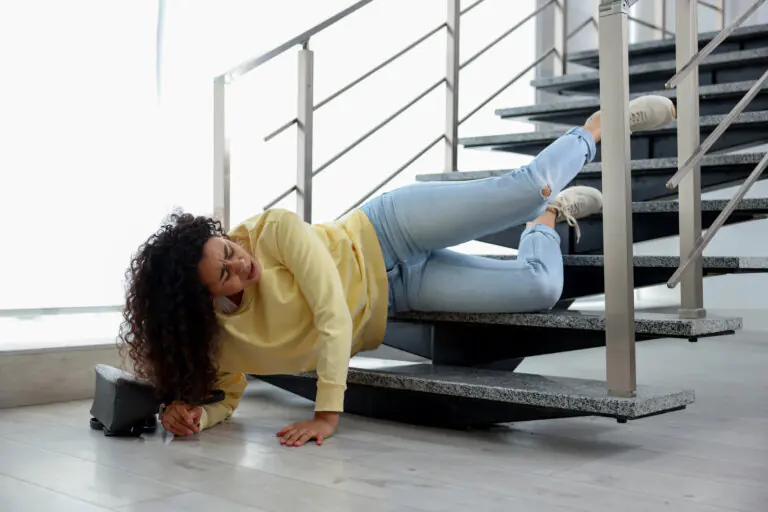
Slip and fall accidents often happen when a walking surface becomes slick from a spilled liquid, a recently mopped floor, leaking refrigeration, or tracked-in rainwater. A fall can cause serious harm, including broken bones, head injuries, and back injuries. Falls are the leading cause of injury for older adults, and a single fall can lead to lasting medical problems. A store that fails to clean up a spill or place a warning sign within a reasonable time may be responsible for the resulting injuries.
Trip and Falls
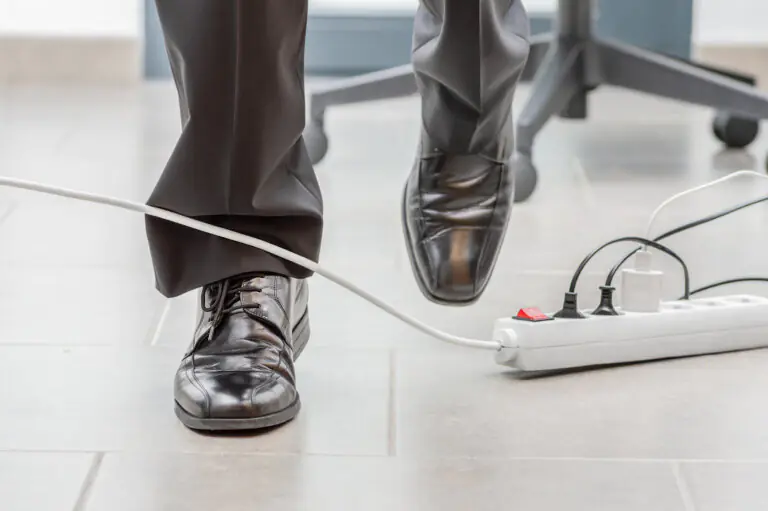
Trip and fall accidents usually involve an obstacle or defect that catches a person’s foot. Common causes include uneven flooring, torn carpet, cracked sidewalks, unmarked steps, exposed cords, and cluttered walkways. Poor lighting frequently makes these hazards worse by hiding them from view. When a property owner allows a known tripping hazard to remain in a walkway, an injured visitor may have a valid claim.
Inadequate Security Incidents
Property owners can sometimes be responsible when a visitor is harmed by the criminal act of a third party, such as an assault in a poorly secured parking lot. Mississippi law in this area changed significantly with the Landowners Protection Act, which took effect on July 1, 2019.
Under the current statute, an injured invitee generally cannot hold a business owner liable for a third party’s violent act unless the injured person proves that the conduct happened on the property and that the owner actively and affirmatively, with conscious decision making, impelled that conduct. Liability also cannot rest on the attacker’s prior violent history unless the owner had actual knowledge of it. These are demanding standards, and inadequate security cases require careful investigation to determine whether a claim is viable.
Swimming Pool and Recreational Property Accidents
Swimming pools, ponds, playgrounds, and other recreational features create serious risks, especially for children. Drowning is a leading cause of death for young children, and a pool can become dangerous in a matter of seconds. Under the attractive nuisance doctrine, a property owner can be held responsible when a feature that is likely to attract children, such as an unfenced pool, injures a child who is too young to appreciate the danger. Owners are generally expected to take reasonable precautions, such as secure fencing and self-latching gates, to keep children away from these hazards.
How Mississippi Premises Liability Law Determines Responsibility
Whether a property owner is legally responsible depends on several factors, including the injured person’s reason for being on the property, what the owner knew about the hazard, and whether the injured person shares any fault.
The Importance of Visitor Status
Mississippi continues to classify people who enter another’s property as invitees, licensees, or trespassers, and the owner’s duty depends on that status. An invitee is someone present for the property owner’s benefit, such as a customer in a store, and is owed the highest duty. The owner or party in charge of the property must use reasonable care to keep the property safe and to warn of hidden dangers.
A licensee enters for their own purposes with the owner’s permission, such as a social guest, while a trespasser enters without permission. To licensees and trespassers, an owner generally owes only the lower duty to refrain from willfully or wantonly causing injury. Because the category controls the duty, visitor status is often a central issue in these cases.
Dangerous Conditions and Notice Requirements
In most premises liability cases, the injured person must show that the owner knew or should have known about the dangerous condition. This is known as notice. An owner has actual notice when the owner created the hazard or was told about it. An owner has constructive notice when the hazard existed long enough that a reasonable owner should have discovered and corrected it during normal inspections. A spill that a store ignores for an hour is very different from one that appears seconds before a fall, and proving how long a hazard existed is frequently the deciding factor.
Comparative Fault in Mississippi Injury Claims
Mississippi follows a pure comparative fault rule. Under this rule, an injured person’s own share of fault does not bar recovery, but it reduces the damages award in proportion to that share. If a jury finds you ten percent at fault, your recovery is reduced by ten percent. Comparative fault works differently from state to state, and Mississippi’s pure version lets an injured person recover even when their share of fault is significant. Insurance companies often try to shift as much blame as possible onto the injured person, because every added percentage point lowers what they pay.
What You Must Prove in a Premises Liability Case
A premises liability claim is built on the elements of negligence. To recover, an injured person generally must prove a dangerous condition, the owner’s knowledge of it, a connection between the hazard and the injury, and actual damages.
Establishing a Dangerous Condition
The first step is showing that an unreasonably dangerous condition existed on the property. A dangerous condition might be a wet floor, a broken stair, an unsecured rug, inadequate lighting, or a hidden drop-off. Photographs, incident reports, maintenance records, and witness statements all help establish that the hazard was real and that it posed an unreasonable risk.
Showing the Property Owner Knew or Should Have Known About the Hazard
Proving the condition existed is not enough on its own. The injured person must also show that the owner had actual or constructive notice of the hazard and a reasonable opportunity to fix it or warn about it. Evidence such as prior complaints, surveillance footage, cleaning logs, and inspection schedules can show what the owner knew and when. When a business has no system for regular inspections, that gap can itself support a finding that the owner should have known.
Connecting the Hazard to Your Injuries
Finally, the injured person must connect the dangerous condition to the injury. This element, called causation, requires showing that the hazard actually caused the harm and that the harm was a foreseeable result. Prompt medical care creates a clear record linking the accident to the injury. Gaps in treatment give insurers room to argue that something else caused the injury, which is why consistent documentation matters from the very beginning.
Steps to Take After a Premises Liability Accident
What you do in the hours and days after an accident can have a lasting effect on your claim. The following steps help protect both your health and your right to compensation.
Seeking Medical Attention
Your health comes first, so seek medical care right away even if your injuries seem minor. Some serious injuries, including concussions and soft-tissue damage, are not obvious immediately. A prompt medical evaluation protects your well-being and creates a record that ties your injuries to the accident.
Reporting the Incident
Report the accident to the property owner, store manager, or landlord as soon as possible and ask that a written incident report be created. If a report is made, request a copy. Reporting the incident promptly helps establish when and where the injury happened and makes it harder for the property owner to later deny that the accident occurred.
Preserving Evidence and Documentation
Evidence disappears quickly after an accident. If you are able, photograph the hazard, the surrounding area, and your injuries, and note the date and time. Collect the names and contact information of any witnesses. Keep the shoes and clothing you were wearing, along with copies of medical records and bills, because these items can become important later in your case.
Avoiding Common Mistakes That Can Affect Your Claim
A few common mistakes can weaken an otherwise strong claim. Avoid giving a recorded statement to the property owner’s insurance company before speaking with an attorney, and do not accept a quick settlement before you understand the full extent of your injuries. Be careful about what you post on social media, since insurers review public profiles for anything they can use to dispute your claim. When in doubt, talk to a lawyer before taking any step that could affect your recovery.
Compensation Available in Mississippi Premises Liability Cases
An injured person may be able to recover both economic and non-economic damages. Economic damages cover measurable financial losses, including:
- Past and future medical expenses
- Lost wages and reduced earning capacity
- Out-of-pocket expenses
- Property damage
Non-economic damages compensate for losses that are harder to quantify, such as physical pain, emotional distress, and loss of enjoyment of life. They also include scarring, disfigurement, and permanent impairment. Mississippi limits non-economic damages in most non-medical civil cases to one million dollars. Claims against government entities are subject to a $500,000 per-occurrence cap under the Mississippi Tort Claims Act and do not allow punitive damages.
Because Mississippi follows pure comparative fault, any award is reduced by the injured person’s percentage of responsibility. An experienced attorney can help calculate the full value of a claim, including future costs that an early insurance offer is unlikely to reflect.
Common Challenges in Premises Liability Claims
Premises liability cases can be difficult to prove, and property owners and their insurers raise predictable defenses. Understanding these challenges helps explain why early legal guidance is so valuable.
Insurers frequently argue that the hazard was open and obvious, that the owner had no notice of it, or that the injured person was partly or entirely at fault. Because Mississippi uses pure comparative fault, even a small share of blame assigned to you reduces your recovery, so these fault arguments carry real consequences. Disputes over how long a hazard existed, and therefore whether the owner had notice, are common and often require surveillance footage, maintenance records, and witness testimony to resolve.
Deadlines present another challenge. Mississippi enforces strict filing deadlines known as statutes of limitations, and missing one usually ends a claim for good. Most personal injury claims must be filed within three years, but claims against a government entity follow a much shorter one-year deadline and require written notice at least 90 days before suit. Acting quickly preserves evidence and protects your options.
Contact Our North Mississippi Premises Liability Attorneys
If you were injured on someone else’s property in North Mississippi, you do not have to face the insurance company alone. At Chatham Gilder Howell Pittman, we believe injured people deserve personal attention, not the assembly-line treatment of a big box law firm. Our attorneys bring decades of trial experience to every case, and we treat each client’s situation as unique. From our offices in Southaven and Hernando, we represent injured clients throughout North Mississippi.
We offer free consultations, and you pay no fee unless we recover for you. To discuss your premises liability case with a North Mississippi personal injury lawyer who will listen, contact Chatham Gilder Howell Pittman today.

